There is an infinite amount of injuries that can occur in the upper extremity. With experience in ortho OT and PT practices, certain injuries appear again and again. The focus here is on common traumatic injuries and how they are addressed. Understanding their typical course can ease anxiety and set realistic expectations.
Distal Radius Fracture
Often from a fall on an outstretched hand, this is one of the forearm bones that breaks right near the wrist. The most common is a Colles fracture, where the fractured part of the bone moves dorsally. Regardless of whether it was displaced or non-displaced, early finger motion and swelling control are followed by progressive wrist strengthening once the cast is removed.
After the cast is removed, range of motion must be restored in three planes — flexion/extension, ulnar/radial deviation, and supination/pronation — before strengthening can begin.
Scaphoid Fracture
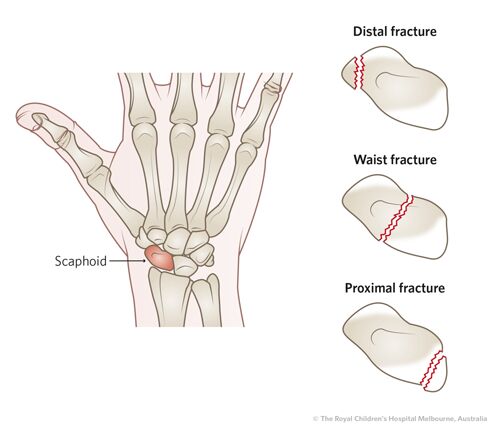
A small bone in the wrist with limited blood supply, scaphoid fractures are often misdiagnosed because they can be hard to see on certain X-ray angles. One patient fell off his bike, was told he had no fracture, and went weeks before the scaphoid fracture was confirmed by an orthopedic doctor. This story is common.
Custom thumb-spica splints and cautious loading prevent non-union and long-term stiffness. Early diagnosis, appropriate splinting, and early mobilization lead to optimal outcomes.
Mallet Finger
A fingertip that will not straighten after sudden force or extreme over-stretching of the dorsal side of the fingertip. There are two types: a bony mallet finger and a soft tissue mallet finger where the tendon becomes overstretched without a fracture. Continuous splinting for 6–8 weeks, then safe and progressive mobilization, yields excellent results when started promptly.
PIP Joint Dislocation
PIP joint dislocations come from sudden force or falls. Treatment varies significantly depending on the direction of dislocation. A dorsal dislocation requires immobilizing the joint in slight flexion due to injury of the volar plate, while a volar dislocation requires splinting in full extension so the central slip can heal properly.
Communication with the doctor is critical — we need to know how much of the tendon was injured and whether the lateral bands were involved.
Thumb UCL Tear
An overstretching or tear of one of the collateral ligaments of the thumb MCP joint. Depending on the level of tear, surgery may be needed. Whether conservative or post-op, a custom thumb spica is needed to allow the area to heal in proper alignment, followed by progressive strengthening.
The Sooner, The Better
“The sooner therapy begins, the smoother the outcome.” Facing any of these injuries? Schedule a consultation at Reach Beyond Therapy to start a proven path back to full function.
Learn more about how we treat hand and wrist fractures, mallet finger and tendon injuries, and post-surgical rehab at Reach Beyond Therapy.