On my Instagram, I posted a series on ulnar sided wrist pain — mostly for climbers, but applicable to anyone who has gotten on the Wrist Widget train. And don’t get me wrong, I am a lover of the Wrist Widget over other braces for TFCC tears. But I have seen so many people giving advice on social media and advising the Wrist Widget for anything painful on the pinky side of the wrist.
I wanted to give the CHT’s perspective on this. And this is important because the Wrist Widget was made by a CHT.
The Wrist Widget is for TFCC Injuries
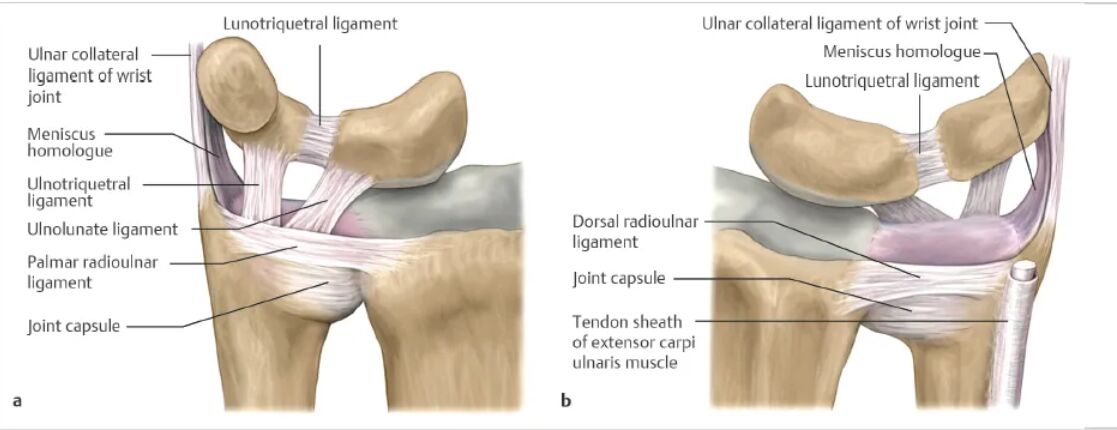
The TFCC — Triangular Fibrocartilage Complex — is made up of many soft tissue structures and cartilage. The central part of the disc has limited blood flow, and when you have a TFCC injury, the main actions that are painful are gripping and weight bearing.
The DRUJ (distal radioulnar joint) is where the forearm bones articulate. When the TFCC is injured, the DRUJ is impacted and no longer stays compactly together during weight-bearing. The Wrist Widget acts as an external stabilizer — like the distal radioulnar ligaments — allowing you to put more weight into your wrist during healing phases.
Ulnar Sided Wrist Pain — Differential Diagnoses
We can’t jump to the conclusion that ulnar sided wrist pain equals a TFCC tear. Here are some other differential diagnoses:
- Flexor Carpi Ulnaris tendinopathy
- Extensor Carpi Ulnaris tendinopathy
- Ulnar Impaction / Ulnar Abutment
- Scapholunate Ligament tears
- Hamate Fractures
- Flexor Pollicis Longus involvement
The Wrist Widget was not made for these conditions, and there are different rehab programs for each. Last month, I saw a climber at an event wearing a Wrist Widget. After a few quick screening tests, we found she had ECU tendinopathy — not TFCC symptoms — and the Wrist Widget was actually causing more swelling and making things chronic.
This doesn’t just apply to climbers. Golfers, cyclists, skiers, people who’ve had distal radius fractures — anyone who puts their wrists into repetitive ulnar deviation is at risk. Just because you do those things doesn’t instantly mean you’re tearing up that TFCC.
Contact me for a free screening to get a real assessment by a Certified Hand Therapist, and let’s guide you in the right direction to get back to what you love most.