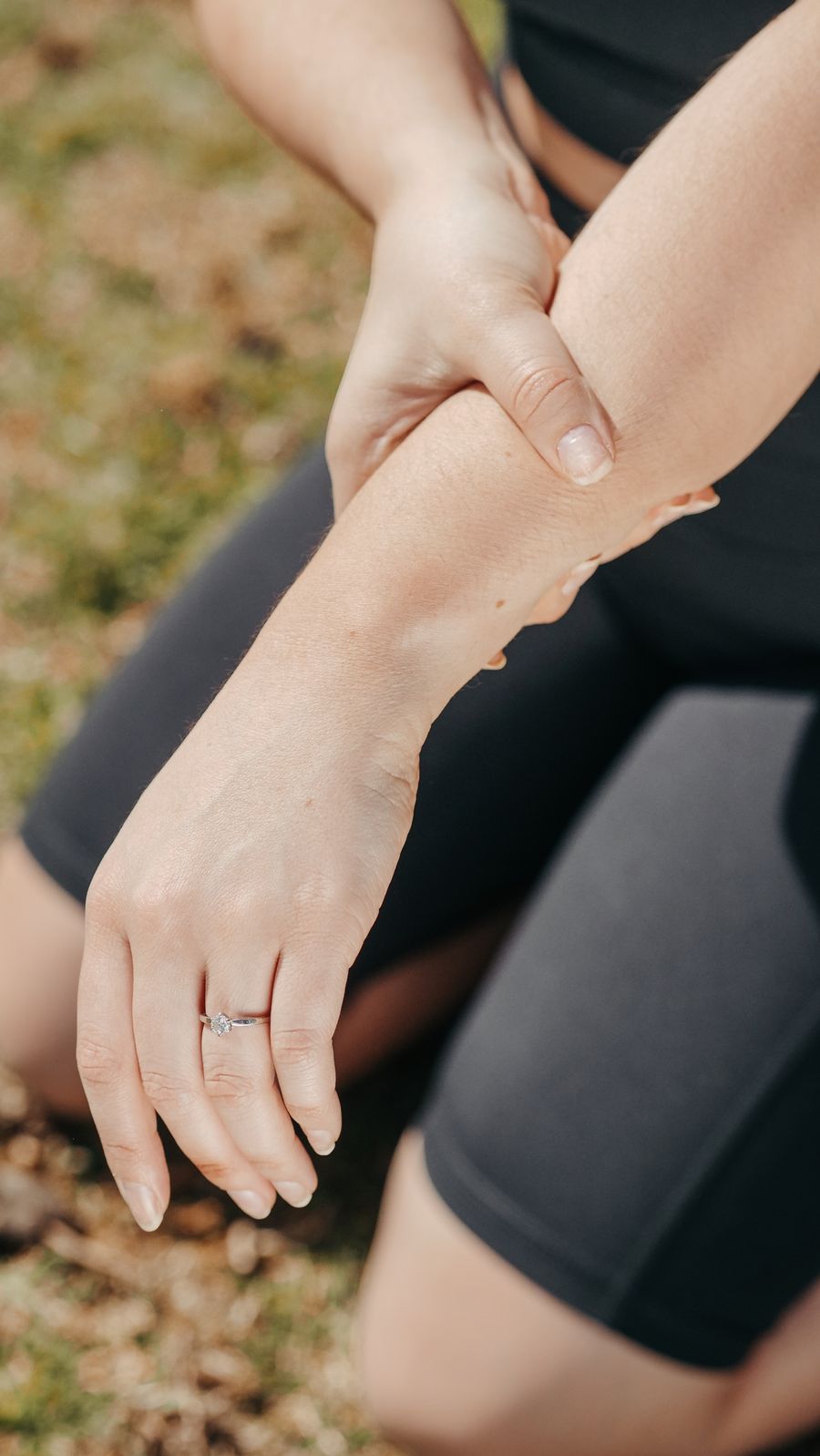
Wrist pain on the pinky side when you twist, grip, or bear weight doesn't have to be something you push through — we can help.
The TFCC — or Triangular Fibrocartilage Complex — is a small but important structure on the ulnar side of your wrist, sitting between the end of your forearm and the small bones of the wrist on the pinky side. It acts as a cushion, a stabilizer, and a load distributor all at once. When it's healthy, you don't notice it. When it's injured, almost everything involving your wrist — turning a doorknob, pushing up from a chair, bearing weight through your hand — can become painful.
What is a TFCC tear?
A TFCC tear is an injury to that cartilage and ligament complex, usually from a fall on an outstretched hand, a sudden twisting force, or repetitive loading over time. There are two types: traumatic tears (from a single incident) and degenerative tears (from wear and tear, more common as we age). Both can cause pain, weakness, and instability — and both respond well to the right kind of rehabilitation. The classic symptom is pain on the ulnar side of the wrist, often made worse by forearm rotation or bearing weight, and sometimes accompanied by a clicking or clunking sensation.
Who gets TFCC tears?
We see TFCC injuries across a wide range of patients — the climber who took a bad fall and landed on a wrist, the gymnast with chronic wrist loading, the racquet sport player who torqued their forearm on a shot, the desk worker with a grinding wrist who's been ignoring it for months. Degenerative TFCC tears are also extremely common in people over 40, often showing up on imaging as an incidental finding alongside wrist pain that's been written off as a sprain. If you've been told you have "ulnar-sided wrist pain" or been handed a splint and sent home, there's often a lot more that can be done.
How do we treat it at Reach Beyond Therapy?
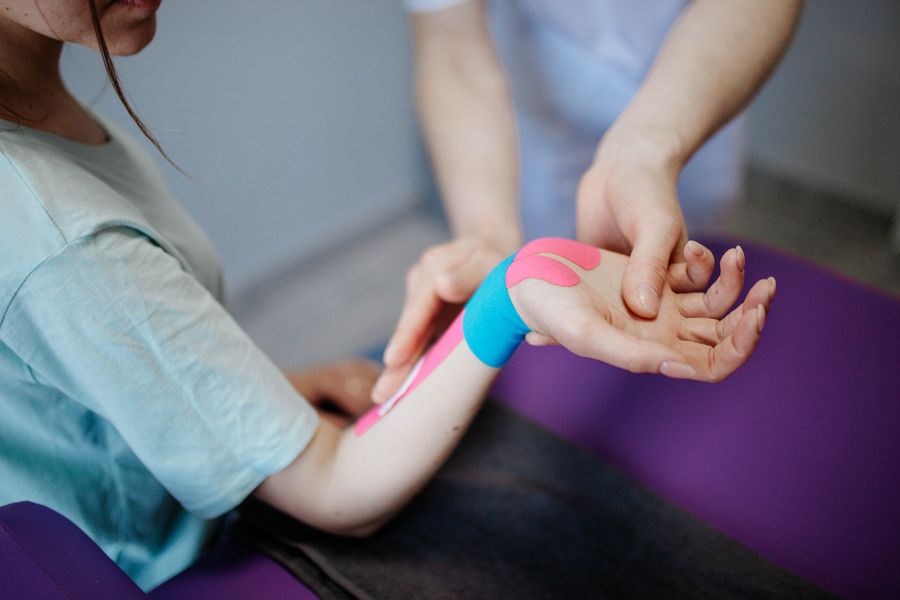
At Reach Beyond Therapy, every session is one-on-one — just you and your therapist, no aides, no rushing, no shortened sessions, and no shared appointments with other clients. Treatment for TFCC tears is tailored to the severity of the injury and your specific goals. We typically start with activity modification and a custom ulnar gutter or wrist splint to protect the healing structure while keeping you as functional as possible. From there we work through range of motion, forearm rotation exercises, and progressive grip and wrist strengthening — while closely monitoring what flares you and what doesn't. If you're post-surgical, we follow your surgeon's protocol closely and make sure your rehab actually reflects what your wrist can handle at each stage.
TFCC injuries are one of many wrist conditions we treat. See our full wrist therapy services for an overview of everything we cover.
Wrist pain on the pinky side when you twist or grip?
Don't push through it — wrist injuries respond best when treated early and precisely. Book a free discovery consult and we'll figure out what's going on together.
I want to share my positive experience working with Jade, my awesome hand therapist, over the past few months. I met Jade two years ago at a hand care session for climbers. Fast forward to last year, I hurt my finger and Jade happened to be hosting another hand care session which I decided to attend again. And I am glad I connected with her! Jade has been incredibly friendly and helpful throughout my recovery process. I especially appreciate how she went above and beyond to accommodate my schedule, which was a huge help since I live quite far away. She was always very responsive and provided many excellent recommendations for various exercises that have been instrumental in my progress. I highly recommend her services to anyone in need of a dedicated and professional therapist!
Google Review
J
Jon Bucci
★★★★★
After rupturing a tendon in my finger (Mallet Finger) my hand Doctor recommended I go to a "big box" Physical Therapy outfit in the South Bay. It was a huge facility and typically there were 3-4 people sitting at the hand therapy desk, all being worked on at once. Thankfully I discovered Jade Wong at Reach Beyond. She operates in a quiet office and the treatment/therapy is one-on-one. This makes for a relaxed environment and you can really learn how to make the most of her advice, when you're at home between PT sessions. Jade is extremely knowledgable, patient and gentle (unlike big box PT outfits). She helped my improve my mobility and ease the discomfort. I would highly recommend Jade, 100 percent!
Google Review
K
Katie Lombardi
★★★★★
Working with Jade has transformed my recovery experience. Losing functionality and strength in my hand after an injury was scary and felt overwhelming, but her guidance has made the process manageable and approachable. She is professional, knowledgeable, and encouraging — making each session not only productive, but genuinely engaging and even enjoyable. I always feel supported, appropriately challenged, and confident that I'm making meaningful progress. I'm incredibly grateful for her care and expertise!
Google Review
C
Colleen Donatucci
★★★★★
Reach Beyond Therapy is a 10+. I brought my 92 year old mother to Jade and her team and the results have been remarkable after three sessions. She and her team are thorough, professional, and incredibly caring and I can't recommend her business enough. Jade is an amazing communicator, patient, and made us feel comfortable, respected, and created a positive and motivating environment.
Google Review
B
Bartosz Bachorski
★★★★★
I've been working with Jade at Reach Beyond Therapy for 10+ sessions now and honestly… I'm really glad I found her. She's super engaged every time — not just going through the motions, but actually paying attention and adjusting things based on how I'm doing that day. You can tell she really knows her stuff. She has a ton of knowledge and experience, but what makes a big difference is how she explains things in a way that actually clicks. What I appreciate most is her persistence. She doesn't just settle for "okay, that's good enough," she keeps working with you until there's real progress. At the same time, she's got a great attitude, easygoing, and just makes sessions feel comfortable. Also, she's been really flexible with scheduling, which has honestly made it much easier to stay consistent. Overall, Jade is super thorough, really knowledgeable, and clearly cares about what she's doing. I'd give her six stars if I could.
Google Review
S
Stephanie Kingdon
★★★★★
One of my children needs support with their functional grip. They are always 100 percent willing to go as Jade is creative in her approach, which makes the session fun and engaging. It's clear that she takes great care in planning the sessions. We saw her before the holidays and she had therapy items prepared with a holiday theme. My youngest also attends the session as a side kick. They "plan" on doing OT when they get older. I highly recommend Jade's practice for her creativity and care.
Google Review
Z
Zoe Martinez
★★★★★
I'm so grateful for Jade! As a hairdresser, my hands are everything, and after overworking I was in so much pain and couldn't move my hand forward. She helped me regain movement and taught me the tools and exercises I needed to keep working pain-free. She really understood the demands of my career. I can't recommend her enough!
Google Review
P
Paola Mendez
★★★★★
I really enjoyed the whole experience. I honestly feel like she listens to you and doesn't make you feel dumb when you ask questions. I was pleasantly surprised that it was 1 on 1 with no front office or being passed to another person. She helped me take some home exercises as well, and I did them which helped. Overall great doctor and person. I am going back and recommending to anyone who needs OT.
Google Review
F
Faraaz Kanji
★★★★★
Reach Beyond Therapy is a dream! Jade has excellent knowledge and excellent bedside manner. Aside from the therapy being 10/10, she was able to see me in 24 hours — and make a custom splint for my finger. I could not recommend Reach Beyond enough! Worth the drive, even if you're far away.
Google Review
L
Lilian
★★★★★
I started coming to therapy with Jade because she was recommended by my PT when my hand was hurting. I recommend her to everybody who needs help with their hands because she helped me a lot to get out of pain so I could resume my normal life! She was also really easy to schedule and reschedule with when I had to shift things around. So flexible, which I am so grateful for. I also saw Angela who was caring and thorough! Thank you Reach Beyond Therapy!
Google Review
S
Samantha Burdick
★★★★★
Jade has been absolutely wonderful to work with! She has helped me tremendously with both pregnancy-related carpal tunnel and postpartum “mommy wrist.” She is incredibly knowledgeable, patient, and attentive, and she takes the time to really understand what I'm experiencing and tailor the therapy to my specific needs. I've seen a noticeable improvement in my symptoms and feel so much better equipped to manage the demands of motherhood without being held back by pain. Jade is warm, encouraging, and genuinely invested in her patients' recovery. I highly recommend her to anyone dealing with hand or wrist pain!
Google Review
D
D
★★★★★
I want to share my positive experience working with Jade, my awesome hand therapist, over the past few months. I met Jade two years ago at a hand care session for climbers. Fast forward to last year, I hurt my finger and Jade happened to be hosting another hand care session which I decided to attend again. And I am glad I connected with her! Jade has been incredibly friendly and helpful throughout my recovery process. I especially appreciate how she went above and beyond to accommodate my schedule, which was a huge help since I live quite far away. She was always very responsive and provided many excellent recommendations for various exercises that have been instrumental in my progress. I highly recommend her services to anyone in need of a dedicated and professional therapist!
Google Review
J
Jon Bucci
★★★★★
After rupturing a tendon in my finger (Mallet Finger) my hand Doctor recommended I go to a "big box" Physical Therapy outfit in the South Bay. It was a huge facility and typically there were 3-4 people sitting at the hand therapy desk, all being worked on at once. Thankfully I discovered Jade Wong at Reach Beyond. She operates in a quiet office and the treatment/therapy is one-on-one. This makes for a relaxed environment and you can really learn how to make the most of her advice, when you're at home between PT sessions. Jade is extremely knowledgable, patient and gentle (unlike big box PT outfits). She helped my improve my mobility and ease the discomfort. I would highly recommend Jade, 100 percent!
Google Review
K
Katie Lombardi
★★★★★
Working with Jade has transformed my recovery experience. Losing functionality and strength in my hand after an injury was scary and felt overwhelming, but her guidance has made the process manageable and approachable. She is professional, knowledgeable, and encouraging — making each session not only productive, but genuinely engaging and even enjoyable. I always feel supported, appropriately challenged, and confident that I'm making meaningful progress. I'm incredibly grateful for her care and expertise!
Google Review
C
Colleen Donatucci
★★★★★
Reach Beyond Therapy is a 10+. I brought my 92 year old mother to Jade and her team and the results have been remarkable after three sessions. She and her team are thorough, professional, and incredibly caring and I can't recommend her business enough. Jade is an amazing communicator, patient, and made us feel comfortable, respected, and created a positive and motivating environment.
Google Review
B
Bartosz Bachorski
★★★★★
I've been working with Jade at Reach Beyond Therapy for 10+ sessions now and honestly… I'm really glad I found her. She's super engaged every time — not just going through the motions, but actually paying attention and adjusting things based on how I'm doing that day. You can tell she really knows her stuff. She has a ton of knowledge and experience, but what makes a big difference is how she explains things in a way that actually clicks. What I appreciate most is her persistence. She doesn't just settle for "okay, that's good enough," she keeps working with you until there's real progress. At the same time, she's got a great attitude, easygoing, and just makes sessions feel comfortable. Also, she's been really flexible with scheduling, which has honestly made it much easier to stay consistent. Overall, Jade is super thorough, really knowledgeable, and clearly cares about what she's doing. I'd give her six stars if I could.
Google Review
S
Stephanie Kingdon
★★★★★
One of my children needs support with their functional grip. They are always 100 percent willing to go as Jade is creative in her approach, which makes the session fun and engaging. It's clear that she takes great care in planning the sessions. We saw her before the holidays and she had therapy items prepared with a holiday theme. My youngest also attends the session as a side kick. They "plan" on doing OT when they get older. I highly recommend Jade's practice for her creativity and care.
Google Review
Z
Zoe Martinez
★★★★★
I'm so grateful for Jade! As a hairdresser, my hands are everything, and after overworking I was in so much pain and couldn't move my hand forward. She helped me regain movement and taught me the tools and exercises I needed to keep working pain-free. She really understood the demands of my career. I can't recommend her enough!
Google Review
P
Paola Mendez
★★★★★
I really enjoyed the whole experience. I honestly feel like she listens to you and doesn't make you feel dumb when you ask questions. I was pleasantly surprised that it was 1 on 1 with no front office or being passed to another person. She helped me take some home exercises as well, and I did them which helped. Overall great doctor and person. I am going back and recommending to anyone who needs OT.
Google Review
F
Faraaz Kanji
★★★★★
Reach Beyond Therapy is a dream! Jade has excellent knowledge and excellent bedside manner. Aside from the therapy being 10/10, she was able to see me in 24 hours — and make a custom splint for my finger. I could not recommend Reach Beyond enough! Worth the drive, even if you're far away.
Google Review
L
Lilian
★★★★★
I started coming to therapy with Jade because she was recommended by my PT when my hand was hurting. I recommend her to everybody who needs help with their hands because she helped me a lot to get out of pain so I could resume my normal life! She was also really easy to schedule and reschedule with when I had to shift things around. So flexible, which I am so grateful for. I also saw Angela who was caring and thorough! Thank you Reach Beyond Therapy!
Google Review
S
Samantha Burdick
★★★★★
Jade has been absolutely wonderful to work with! She has helped me tremendously with both pregnancy-related carpal tunnel and postpartum “mommy wrist.” She is incredibly knowledgeable, patient, and attentive, and she takes the time to really understand what I'm experiencing and tailor the therapy to my specific needs. I've seen a noticeable improvement in my symptoms and feel so much better equipped to manage the demands of motherhood without being held back by pain. Jade is warm, encouraging, and genuinely invested in her patients' recovery. I highly recommend her to anyone dealing with hand or wrist pain!
Google Review
Serving the South Bay
TFCC Tears Can Heal — With the Right Plan.
Reach Beyond Therapy proudly serves Redondo Beach, Torrance, Hermosa Beach, Manhattan Beach, El Segundo, and Palos Verdes with expert hand therapy, custom splinting, and post-operative rehabilitation by a Certified Hand Therapist with over 10 years of experience.