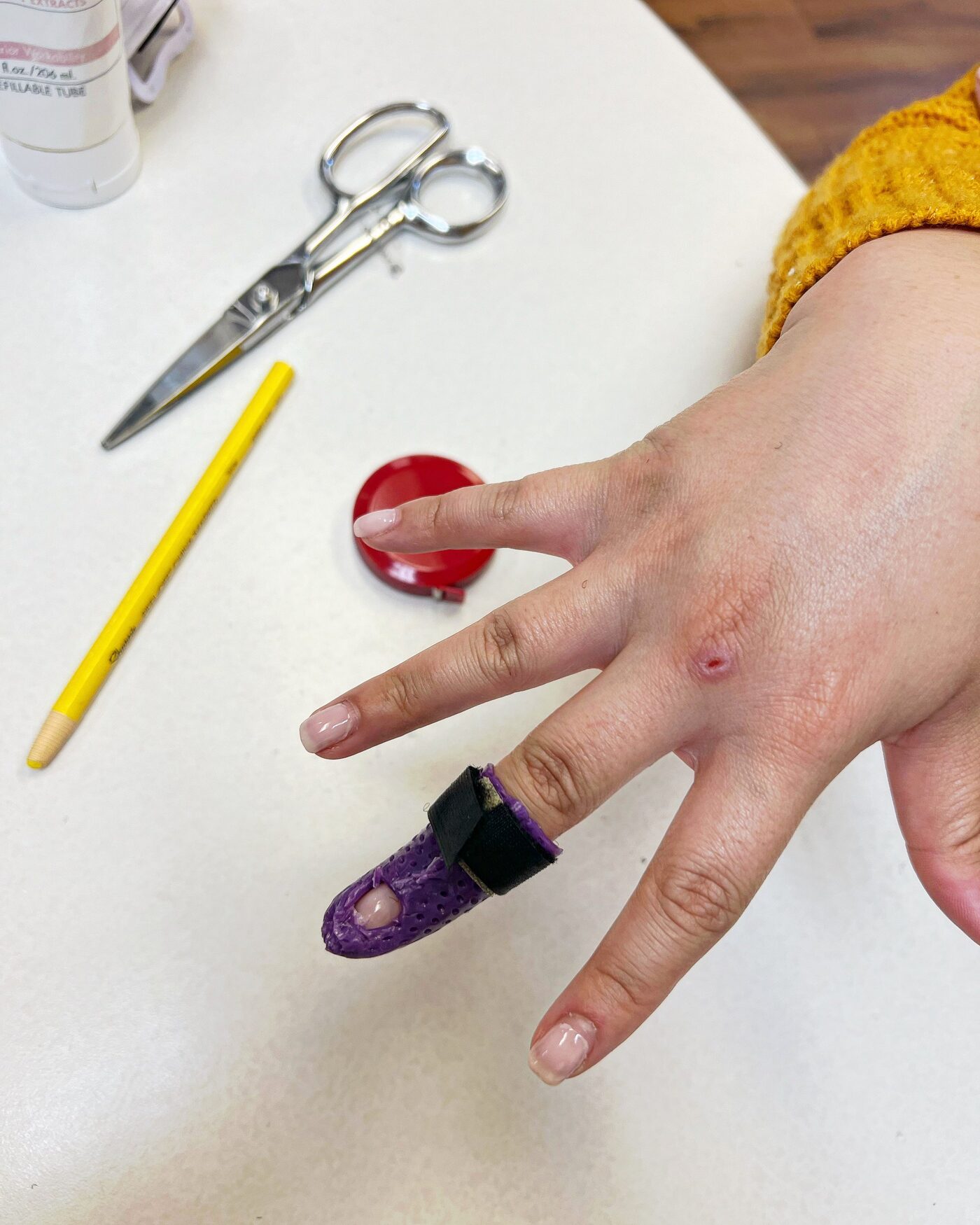
Trigger finger happens when the tendon sheath around one of your flexor tendons becomes thickened or inflamed at the A1 pulley — a narrow tunnel at the base of your finger. When the tendon can't glide smoothly through that space, it catches, pops, or locks as you try to bend and straighten your hand.

What is trigger finger?

People come in with trigger finger at all stages. Some notice it first thing in the morning — a stiff finger that won't straighten easily, or a click when they close their fist. Others have had a finger lock bent for months and need to physically straighten it with their other hand. Gardeners, golfers, climbers, musicians, and people with diabetes are among those we see most. But really, anyone who does repetitive gripping can develop it.
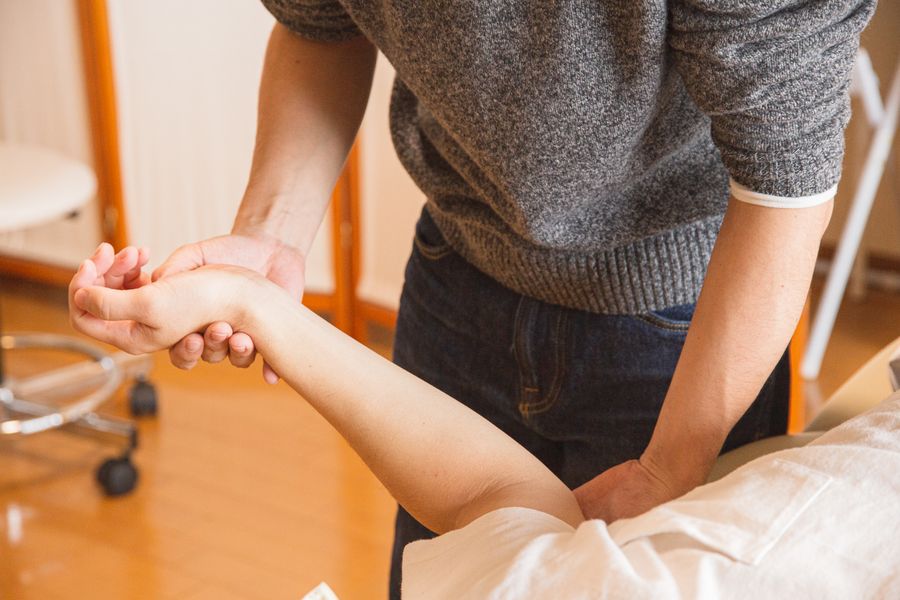
Therapist working on a patient's injured hand during one-on-one trigger finger treatment
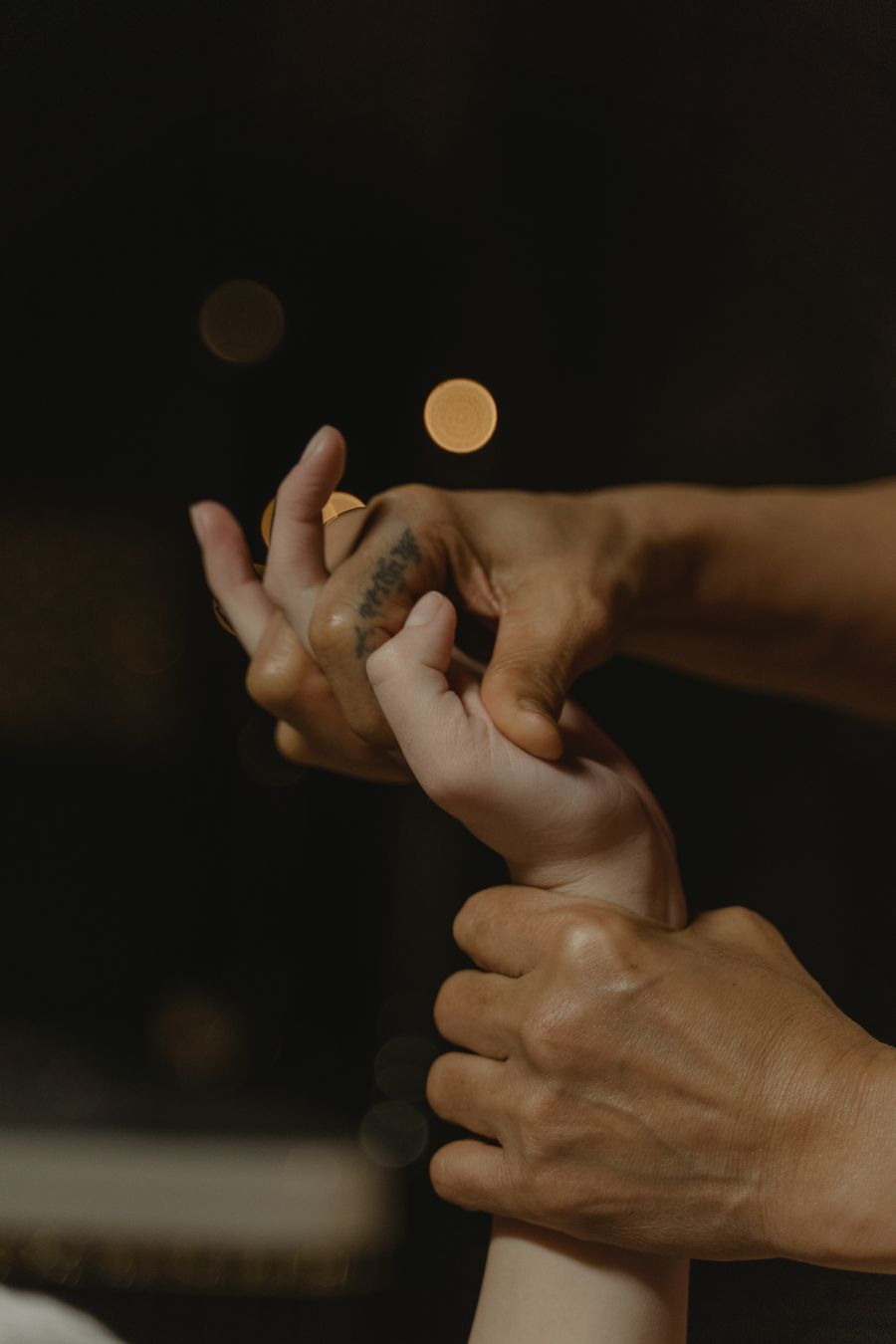
Close-up of soothing hand massage therapy targeting finger tendons and palm

Who gets trigger finger?

We commonly see trigger finger in patients who grip repeatedly through the day — gardeners, construction workers, musicians, and avid rock climbers. It also shows up more frequently in people with diabetes and in adults over 40. If you've been noticing that a finger clicks when you make a fist, or catches and needs a little persuasion to straighten, you don't have to wait until it gets worse to come in.

How do we treat it at Reach Beyond Therapy?

At Reach Beyond Therapy, every session is one-on-one — just you and your therapist, no aides, no rushing, no shortened sessions, and no shared appointments with other clients. For trigger finger, we typically start with a custom resting splint to let the tendon sheath calm down, paired with tendon gliding exercises to keep the finger moving without aggravating it. We'll look at what in your day-to-day is loading that tendon, and build a plan to modify that load as the tissue heals. We adjust as you improve, and if the finger is responding well to conservative care, many patients avoid injections or surgery entirely.

Your Options

Conservative Care, Injection, or Surgery?

Trigger finger has a range of treatment paths. Here’s where hand therapy fits.

Conservative Hand Therapy

Usually the first step, and often most effective when started early. A custom resting splint calms the tendon sheath, tendon gliding keeps the finger moving, and load modification changes the gripping habits that keep irritating it.

Corticosteroid Injection

Given by your physician, an injection can reduce inflammation in the tendon sheath. It’s sometimes combined with splinting and therapy. We coordinate with your doctor if this is part of your plan.

Trigger Finger Release Surgery

When a finger stays locked or doesn’t respond to other care, a surgeon may release the tight pulley. Hand therapy afterward helps restore full motion, reduce swelling, and manage the scar. See post-surgical hand rehab.

Our goal with conservative care is to help you avoid surgery where possible — and, if surgery is the right call, to make sure you go into it and come out of it with the best possible hand function.

Same-Day Custom Splinting

A Resting Splint Made for Your Finger

Off-the-shelf trigger finger splints rarely fit well. We mold a thermoplastic splint directly to your hand in the clinic, and when it’s medically necessary we can fabricate it during the same visit — so you leave with the right support from day one, and we adjust it as your finger improves.

Learn About Custom Splinting
Custom thermoplastic finger splint being fabricated by a Certified Hand Therapist
Torrance & South Bay Patients

Trigger Finger Care for Torrance & South Bay Patients

We’re in Redondo Beach at 2512 Artesia Blvd, Suite 130 — we don’t have a Torrance office, but the drive is short: about 5–10 minutes from North Torrance via Artesia Blvd and roughly 15–20 minutes from Old Torrance, Walteria, or the Hollywood Riviera via PCH. Many of the trigger fingers we see come from repetitive gripping — golf, gardening, tools, and long days of mouse and steering-wheel work — which is exactly the kind of load we help you modify.

More for South Bay patients: hand therapy near Torrance · carpal tunnel therapy (often seen alongside trigger finger) · custom splinting · post-surgical rehab.

Not sure if what you're feeling is trigger finger?

Book a free discovery consult and we'll work with you to figure out what's going on and what we can do about it.

Work With Us
Trigger Finger FAQs

Frequently Asked Questions

Yes, many trigger finger cases resolve without surgery. Conservative treatment — including a custom trigger finger splint, activity modification, and targeted tendon gliding exercises — is often effective, especially when treated early. Surgery (a trigger finger release) is typically a last resort.

Mild to moderate trigger finger often responds within 4–6 weeks of consistent splinting and therapy. Severe cases — where the finger is locked in a bent position — may take longer or require a corticosteroid injection alongside therapy. Early intervention typically leads to faster recovery.

Trigger finger causes pain, stiffness, and a catching or locking sensation when bending or straightening the finger. You may feel a tender nodule at the base of the finger in the palm. In severe cases the finger can lock in a bent position and require manual straightening.

Often, but not always. Trigger finger (stenosing tenosynovitis) can show up as a click, a catch, or a finger that locks bent and has to be pushed straight. A finger that won’t straighten can also come from a joint, ligament, or tendon injury, so it’s worth having it evaluated rather than assuming.

Not necessarily. Many people improve with conservative care — a custom resting splint, tendon gliding, and changing how the finger is loaded during the day. If symptoms persist or the finger stays locked, your physician may discuss a corticosteroid injection or a trigger finger release. If you do have surgery, we provide the post-operative therapy to restore motion and manage the scar.

It depends on how long you’ve had symptoms and how severe they are. After your evaluation we’ll give you a realistic estimate and a home program, so a lot of the progress happens between visits.

Yes. Our clinic is in Redondo Beach on Artesia Blvd — about 5–10 minutes from North Torrance and roughly 15–20 minutes from southern Torrance neighborhoods. See our hand therapy for Torrance patients page for directions and drive times.

Patient Stories

What Our Patients Say

Read more Google reviews

Serving the South Bay

Caught Early, Trigger Finger Is Very Treatable.

Reach Beyond Therapy proudly serves Redondo Beach, Torrance, Hermosa Beach, Manhattan Beach, El Segundo, and Palos Verdes with expert hand therapy, custom splinting, and post-operative rehabilitation by a Certified Hand Therapist with over 10 years of experience.

Book a Free Discovery Consult
Stay in the Loop

Functional Tips & Tricks

Practical hand, wrist, and elbow tips from a Certified Hand Therapist — straight to your inbox.